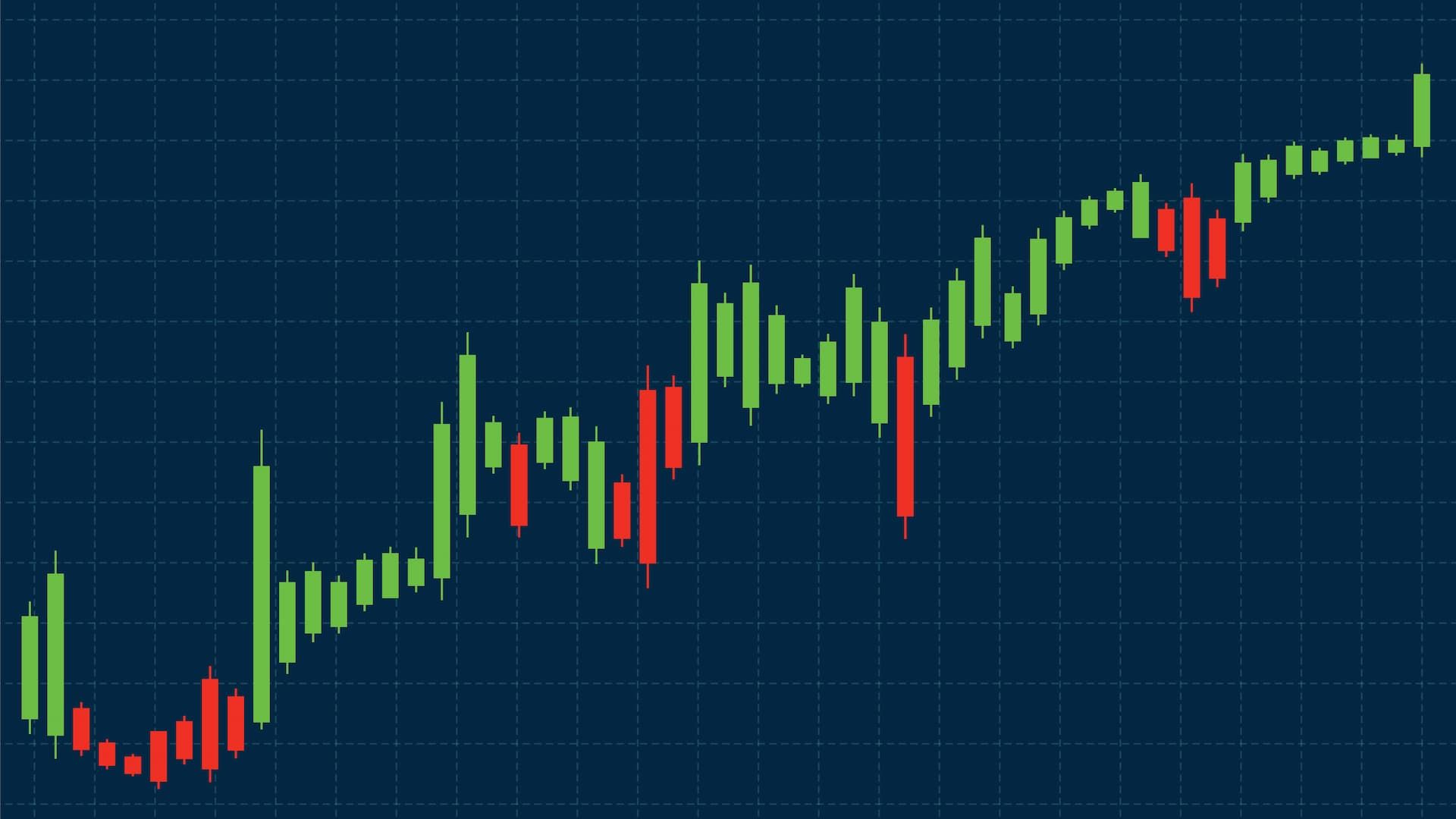
Candlestick patterns are a visual representation of market action, painting a picture with every low and high price reached during a specific timeframe. Each candle tells a story, with its colour, body, and wick revealing all the market sentiment you need to know. It's been a long-standing tradition for traders to rely on these patterns to spot shifts in momentum and with good reason. When you see a string of bullish candles, for instance, you know you've got a buying force taking control, while a run of bearish candles tells you that selling is in play.
Why Candlestick Patterns Matter When It Comes to Market Analysis
The significance of candlestick patterns in market analysis is huge, because they get to the heart of the psychological battle between buyers and sellers. While traditional bar charts can be a bit clumsy in conveying this information, candlestick patterns offer a crystal clear picture of whether the market is about to continue on its current path or if there's a reversal afoot. Take the morning star pattern, for example, a three candlestick sequence that can signal the end of a downtrend, by showing a candle where the sellers are running out of steam, followed by a gap lower and then a very nice recovery. This gives you a very clear signal to get into the market, even when the opening and closing prices are all over the place.
How Traders Read Bullish and Bearish Momentum
When it comes to reading bullish and bearish momentum, it's all about the relative size of the candle body and the wick. When you see a bullish candle with a tiny upper wick, you know that the buying is in control and that the sellers are getting nowhere. On the other hand, when you see a bearish candle that's closing near the low, you know that the buyers were unable to hold onto their gains and that selling pressure is in play. This sort of analysis extends to longer term setups, too, like the three white soldiers, which is a sequence of long-bodied advances that confirms a bullish reversal and the three black crows, which erodes prior highs through relentless selling.
Key Single-Candle Reversal Patterns
In many cases, a single candle can be enough to signal a market turning point and that's where single-candle reversal patterns come in. These patterns are all about the disproportionate wicks that show you that prices are being rejected and that control is shifting. The inverted hammer, for example, is a classic downtrend reversal, where a small body sits atop a very long upper wick, indicating that the buyers are starting to get excited. And then there's the hanging man, which appears in up trends with a lower shadow that rejects support, and the shooting star, which caps rallies by showing an upper wick that's just too much for the buyers to handle.
Hammer Candlestick Pattern
The hammer is a classic bullish reversal pattern that forms at the bottom of a downtrend and it's got a very distinctive look. It's got a small upper body and a long lower shadow that's at least twice as long as the body and what that's telling you is that the sellers took prices down to the bottom, only for the buyers to come in and reclaim ground by the close. This happens when the closing price is near the opening price, in the upper third of the range and that's a sign that the bears are losing their grip. Traders will often wait to see if the next day brings a bullish candle and if it does, that's a green light to get into the market, targeting nearby resistance levels.
Inverted Hammer Candlestick Pattern
The inverted hammer is the mirror image of the hammer, but instead of a long lower shadow, it's got a long upper shadow. It appears after a decline and what it's telling you is that the initial buying enthusiasm has faded, but there's still a suggestion that optimism is building. The body of the inverted hammer is low down, and the shadows are telling you that volatility is high, but the pattern itself is saying that sellers can't quite get the upper hand. When this happens, with volume spiking, it's often a signal that buyers are probing for acceptance, and that a sustained advance is on the cards.
Hanging Man Candlestick Pattern
The hanging man is a bearish reversal pattern that appears at the top of an uptrend. It's got a small body and a very long lower shadow and what that's telling you is that there's been some intraday selling, met with a partial recovery. But the long lower wick is the key. It's saying that buyer conviction is waning. If the opening price gaps up from the prior close, that's an extra sign that the buyers are losing their grip. Traders will often look for a bearish candle to close below the low of the hanging man and if they do, that's a signal to get out or short the market, targeting support and resistance breakdowns.
Shooting Star Candlestick Pattern
The Shooting Star is a classic bearish reversal signal that appears at the peak of an uptrend, characterized by a small lower body and a long upper shadow. This formation indicates that while buyers initially pushed prices higher, sellers took control by the close, "slapping back" the upward momentum.
Key Characteristics of the Shooting Star Pattern
Structure: Features a small body at the lower end with an upper shadow at least twice its length, signaling price rejection.
Context: Most effective when appearing after parabolic moves or near historical resistance levels to signal an overextended market.
Strategy: Traders often enter short on a gap-down confirmation, placing stop-losses above the shadow high and targeting prior support levels.
Doji Candlestick Pattern
The Doji is a high-utility candlestick pattern signaling market indecision where the opening and closing prices are virtually identical. Represented visually as a "cross," it marks a temporary stalemate between buyers and sellers that often acts as a precursor to a significant trend reversal or price breakout.
The Gravestone Doji indicates a rejection of higher prices and a potential bearish reversal, while the Dragonfly Doji shows buyers pushing back against lower prices for a bullish turn. Ultimately, a Doji serves as a critical indicator for identifying market pauses or emerging trend shifts, especially when confirmed by volume changes or surrounding price action.
Spinning Top Candlestick Pattern
The spinning top candlestick pattern is all about uncertainty. It's got this teeny tiny middle body and two shadows that are pretty much equal in length. It's like the whole market's just hemming and hawing. They pop up in both uptrends and downtrends, but when you see three of them in a row like a little row of soldiers you know something big might be on the horizon, especially if they're clustered around some key levels. And then you've got to look at the volume, if it's low, you might read it as a sign that the market's getting a little tired, but if it's high you know there's all sorts of tension building up for a directional resolution.
Bullish Reversal Candlestick Patterns
Bullish reversal candlestick patterns. These are the ones where the market's like 'oh wait, you know what? maybe we should head in the other direction after all'. They show up at the bottoms of downtrends, often in the form of some multi-candle sequence where the bears are slowly but surely losing ground. You see 'em with a big bearish candle, followed by a doji-like middle and then a bullish closer. That's the morning star. Or then there's three white soldiers. These are the ones where the buyers are just marching steadily upwards, one long-bodied candle after another, and they're not really taking any prisoners.
Bullish Engulfing Candlestick Pattern
The bullish engulfing candlestick pattern is all about the bears getting rolled over. It's when a second bullish candle comes along and just engulfs the previous bearish one completely. It's pretty much a slam dunk that the buyers are in control now. This happens most often after one of those tiny little bearish candles in a downtrend, and the whole setup is pretty straightforward: the first candle is bearish, the second one is bullish and closes above the high of the first one, and then you've got a winner. Traders will often use this to short assets at the top of their RSI range, knowing the pattern has a pretty solid 70% success rate in getting at least three green candles in a row.
Piercing Line Candlestick Pattern
The piercing line candlestick pattern is when the market's like 'hmm, I'm not so sure about this downtrend after all'. It's a two-candle setup where the second one opens with a gap down but then closes above the midpoint of that first bearish candle. It's really starting to look like the buyers are taking over. This can be really useful especially after a long downtrend near a support or resistance zone, and the more volume you see behind it the more convincing it is. Traders will often use this to go long on the assumption that the next 5-10 candles are going to be pretty green.
Morning Star Candlestick Pattern
The morning star candlestick pattern is a real doozy. It's when you get a big bearish opener, followed by a tiny little middle candle that's all about indecision, and then a big bullish closer that just blows the top right off that first bearish candle. That middle candle is often a spinning top or a doji, and what it's saying is that the buyers are kind of in a funk, but then the third candle comes along and says 'oh no, we're not out of this yet'. It's a pretty good sign for a rally, especially in the daily charts of some of those more volatile sectors.
Three White Soldiers Candlestick Pattern
The three white soldiers candlestick pattern is just a big show of force. It's when you get three long-bodied candles in a row, each one opening within the body of the previous one, and each one closing near the high with just a tiny little shadow. It's like the buyers are just marching steadily upwards, like a parade, and this can be a really useful signal for investors who are looking to make some long-term bets in an uptrend.
Bearish Reversal Candlestick Patterns
Bearish reversal candlestick patterns - these are the ones where the market's like 'oh no, I think we should head in the other direction now' and they're usually signalled by some kind of big downtrend in an uptrend. They show up in the form of a bearish peak doji, followed by a bearish engulfing candle. And the funny thing is, these formations have a pretty solid 60% downs follow-through across equities and forex, which can be really helpful for traders who are trying to short assets at the top of their RSI range.
Bearish Engulfing Candlestick Pattern
The bearish engulfing candlestick pattern is a major momentum reverser that shows up over two days. A humongous bearish second day completely swallows the preceding small green candle's body, plus it opens above the high of that green candle and closes below its low with massive trading volume. After some wild run-ups, it signals the big guys are now taking control, with this pattern advising sellers to target the previous swing low on the way down: we're talking 2-4% declines here. The edge really stacks up when we're in overbought conditions and resolves into bearish candles 75% of the time in the indices.
Evening Star Candlestick Pattern
The evening star candlestick pattern is a warning sign that an uptrend is about to get knocked off track with three acts: a big green opening act, a small red middle act with some length, and a final fateful red candle that closes right on the midpoint of that first green one. It's like a flashing warning light saying "buyer beware, things are about to get ugly".
The middle act is where we really see the indecision and things start to go south, especially when the shadows are way out there beyond 50% of the whole range. It's a real confirmation of a potential downturn when we see some downside gaps too. Historically speaking, this pattern has been good for around 10-15% corrections over about 15 days, making it a great time to consider hedging any long positions you might have.
Three Black Crows Candlestick Pattern
The three black crows candlestick pattern shows a group of three consecutive long bearish candles, each gapping down, opening lower and closing near the session low with little or no wicks at all, it's like a row of three black crows flying in on us. This is a surefire sign that the bulls are losing their grip after some kind of rally and it happens most often after a good run-up, where we see a bunch of volume on the closes below the opens, just to rub it in. With a bit of study, we can project the exact same height down as the first bearish candle, giving us a real sharp target. Studies have shown us that this pattern is all-but-spot on 70% of the time, making it a real aggressive short strategy.
Dark Cloud Cover Candlestick Pattern
The dark cloud cover candlestick pattern basically shows us a one-two punch of selling pressure with a two-candle bearish combination. The first is a big green candle, then the second one opens above the high of that green one, but then... the second one just closes way below the midpoint of that green one after a bit of resistance at the top end of the range. It's like the cloud that was looming overhead suddenly pours down on us, because in this pattern we see seller infiltration and it's at its most effective when the green candle is a rounded top. When we see the second candle close in the bottom third of its range and there's a bit of a volume spike to boot, our reversal rates really jump up to 62%, which is a pretty nice edge to bet with.
Continuation Candlestick Patterns for Trend Confirmation
Continuation candlestick patterns are really just a special kind of trend-continuation signal. They basically tell us that volatility is just taking a short breather before the trend really gets back on track. Think of a flag or pennant pattern. They're just indecisions that happen right in the middle of a major trend. The really important thing about these is that they don't have any of the extreme shadows or gaps that we see with reversals, which just tells us that the trend is still intact and we just need to wait for it to get back on track. These patterns really do give us an 80% edge when we see volume taper off, followed by a big surge on the continuation.
Rising Three Methods Candlestick Pattern
The rising three methods candlestick pattern is a bit of a five-candle sequence that basically tells us that an uptrend is still alive and kicking. There's a big green opener, followed by three small red candles that test support without breaking through, which is when the shorts get squeezed. It's like the little red candles are just little testing matches to see if the trend can still hold up and when the shadows are all the way down in the green candle's body, we know that this trend is really still on the rise. This pattern is really good at projecting the exact same height up as the first green candle and it really does work 68% of the time in bull markets for some layered entries.
Falling Three Methods Candlestick Pattern
The falling three methods candlestick pattern is the mirror image of its rising kin, with a bearish leading candle, followed by three small green candles that test resistance without breaking through and then a final fateful bearish candle that closes right on the low of the first one. It's like the little green candles are just there to test whether the trend is still intact and when we see the shadows all the way up in the body of the first red candle, we know the trend is really still falling. This pattern has historically been quite good at projecting the exact same height down as the first red candle and it really does work 65% of the time in downtrends for scaling shorts.
How to Apply These Candlestick Patterns in Real Trading
When it comes to applying these patterns in the real world, the key thing is to layer them on top of your broader technical analysis. You want to look for these patterns to form on top of some other technical confirmation like a big volume surge after a hammer formation, to filter out those false signals that can happen in choppy sessions. Your risk parameters are going to dictate where you place your stops, below the pattern lows for longs or above the pattern highs for shorts, and then you want to target a 2:1 reward ratio in alignment with support and resistance nearby. Backtesting on your trading platform is really key here, to figure out the context in which these patterns work best.
For example, favoring engulfings in trends over ranges, which can boost your win rates from 50% to 70% across all asset classes.
Combining Multiple Signals for Stronger Confirmation
The best thing to do with these patterns is to combine them with other indicators to give you a real stronger confirmation. If you combine an evening star with some RSI divergence, that reverses your probability of a reversal by 100 percent, compared to just using the evening star on its own. By overlaying some moving average crossovers or MACD histograms, you can make sure that your patterns line up with the macro trend, which is really key to cutting down on those whipsaws in volatile pairs.
Using Support, Resistance, and Volume to Validate Patterns
When it comes to validating these patterns, the key thing to remember is that support and resistance are really the anchors that keep everything in place. When we see a shooting star rejecting some overhead resistance, that gives us a 75% bearish conviction that our pattern is really going to play out. Volume is the other key metric here, when we see a big volume surge after a piercing line close, that really tells us that the intent is there, over some low-turnover fake.
By integrating these metrics via some dynamic levels like Fibonacci retracements, you can really tailor your trades to get the most out of them, and that's when you can really pinpoint those invalidation rules for 1-3% risk per setup.